

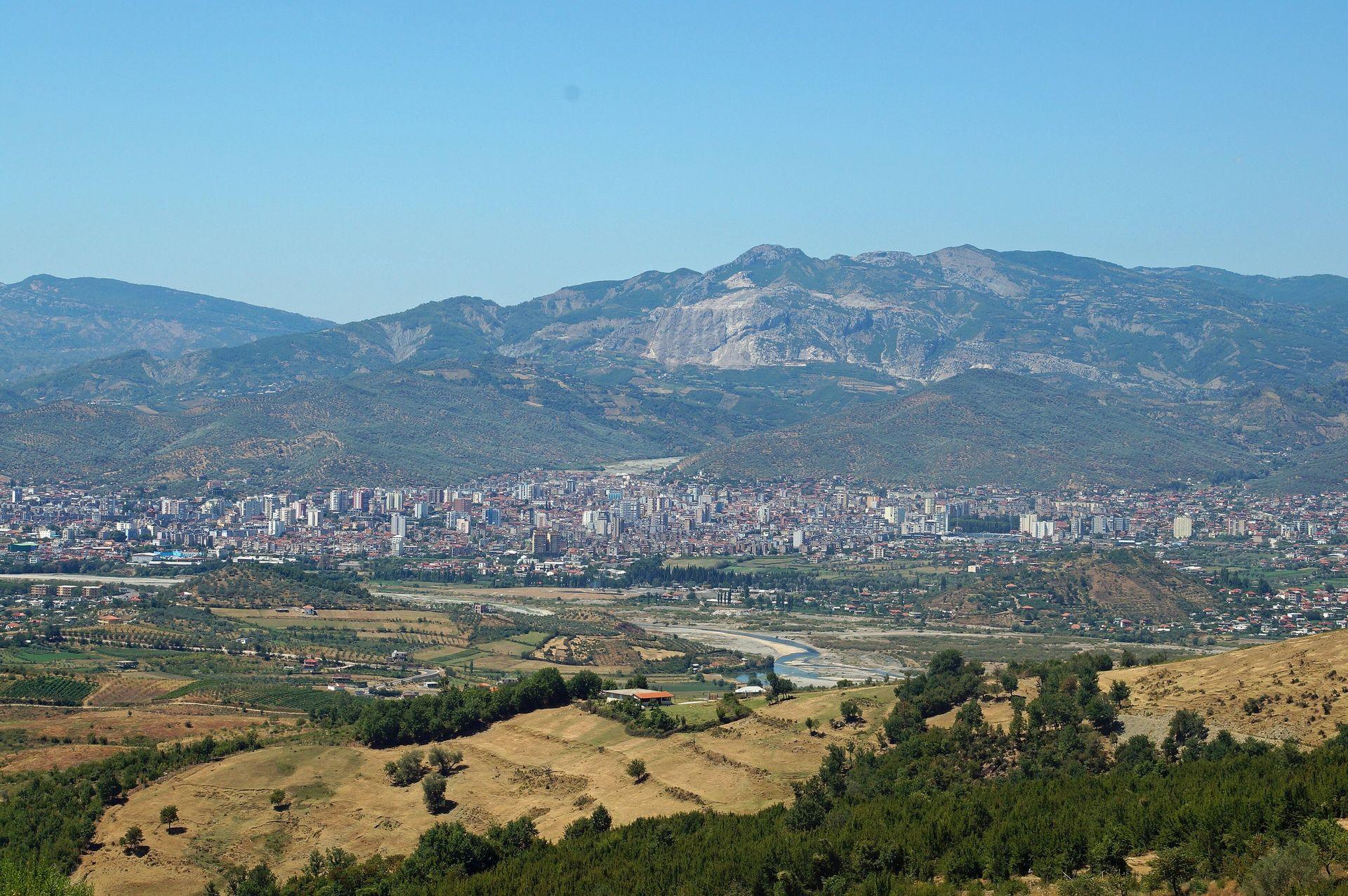

Photo: Pasztilla aka Attila Terbócs, CC BY-SA 4.0, via Wikimedia Commons
Church of St. John Vladimir
Church of St. John Vladimir is a medieval Albanian Orthodox church in Shijon, near Elbasan, and one of the country's most significant religious and cultural monuments.
- City: Elbasan
Dating to its present form from 1381, it is closely associated with the medieval ruler Karl Thopia, the cult of Saint John Vladimir, and the development of Orthodox scholarship and Albanian literary history.
Historical significance

The church stands on the site of an earlier basilica believed to date to the era of Tsar Samuil. In 1381, Karl Thopia, Prince of Albania, rebuilt the church on a much larger scale and is traditionally credited with transferring the relics of Saint John (Gjon) Vladimir there, making it an important pilgrimage destination across the Balkans. Karl Thopia himself was later buried at the church.
Architecture and artistic heritage

Designed as a three-nave basilica, the church reflects late medieval Orthodox architecture in Albania. Its carved stone entrance portal is especially notable, while the interior gained additional artistic importance in the 18th century through frescoes painted by the celebrated iconographer Kostandin Shpataraku. Although parts of the surrounding monastery were damaged over time, the complex remains an important example of Albania's medieval religious heritage.
Cultural importance
An Orthodox monastery developed around the church and became a major intellectual center. During the 18th century, it served as the seat of the Archdiocese of Durrës, where Archbishop Gregory of Durrës produced the Elbasan Gospel Manuscript, one of the earliest works of Albanian Orthodox literature and the only known text written in the unique Elbasan script. The monastery also became associated with the later Todhri alphabet, another original Albanian writing system.
Heritage status
he church was designated a Cultural Monument of Albania in 1948 in recognition of its architectural, historical, and religious importance. Today it remains a destination for pilgrims, historians, and visitors interested in Albania's medieval past and Orthodox cultural traditions.
More to discover in Elbasan

Elbasan Castle
One of the most important monuments of Albania and one of the largest field castles in the Balkans.
Read more →
Ancient City of Skampis
Skampis was an important Roman city along the Via Egnatia.
Read more →
Ethnographic Museum of Elbasan
The Muzeu Etnografik i Elbasanit is an ethnographic museum housed in a historic Ottoman-era residence in the heart of Elbasan, Albania.
Read more →Planning a trip?
Flights, car rental, tours, eSIM data, insurance and stays from partners we trust.
see travel dealsImages on this page are shown from their original sources and belong to their respective owners.