

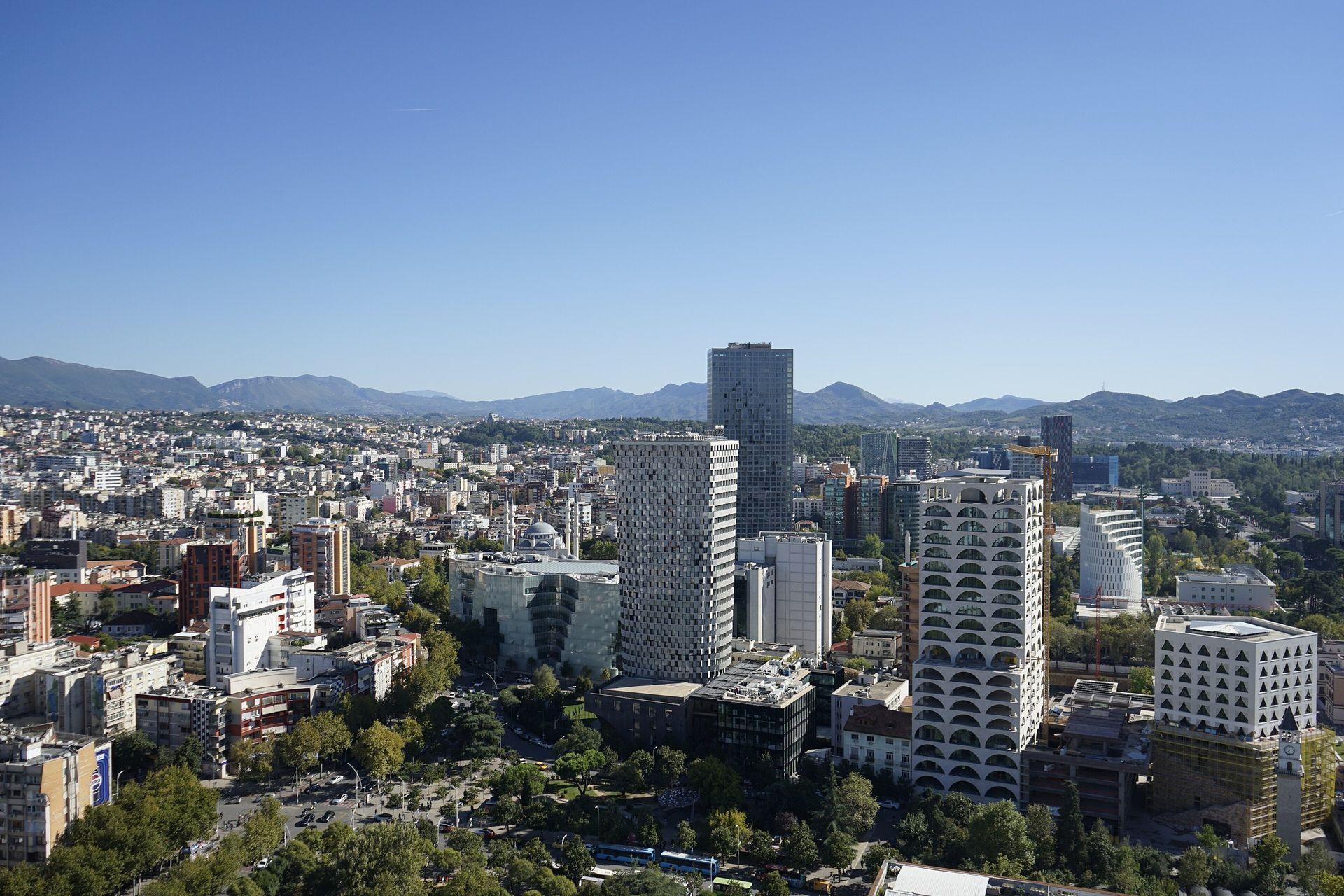

Palace of Culture
The Palace of Culture (Pallati i Kulturës) is one of Tirana's best-known cultural landmarks, occupying a prominent position on Skanderbeg Square.
- City: Tiranë
- Open in Google Maps →
It serves as a major center for the performing arts and public life, housing the National Library of Albania and the National Theatre of Opera and Ballet, while remaining an enduring symbol of the city's communist-era architecture.
What to see

The building is notable for its monumental socialist-era design, broad colonnade, and commanding presence overlooking the city's main square. Inside are the National Theatre of Opera and Ballet, the National Library of Albania, exhibition spaces, conference halls, and a small shopping arcade, making it both a cultural venue and an active public building rather than simply a historic monument.
History and architecture

Construction began in 1959, with the foundation stone ceremonially laid by Nikita Khrushchev during a period of close Albanian–Soviet relations. The complex was completed in the early 1960s after Soviet assistance ended, and it was built on the site of Tirana's former Old Bazaar, a redevelopment that significantly reshaped the city center. Its architecture reflects the monumental style common across Eastern Europe during the communist period.
Cultural significance

For decades, the Palace of Culture has hosted operas, ballets, concerts, exhibitions, and major public events. Today it continues to function as one of Albania's principal cultural institutions while also standing as an important example of the country's twentieth-century architectural and urban history.
More to discover in Tiranë

Skanderbeg Square
The historical and administrative center of Albania, it is the most visited attraction in Tirana.
Read more →
Et’hem Bey Mosque
Built in the 18th–19th centuries. One of the most important Ottoman monuments in Albania.
Read more →
Clock Tower
Historical symbol of the city, built in 1822.
Read more →Planning a trip?
Flights, car rental, tours, eSIM data, insurance and stays from partners we trust.
see travel dealsImages on this page are shown from their original sources and belong to their respective owners.