


The Church of the Cross of Labovo
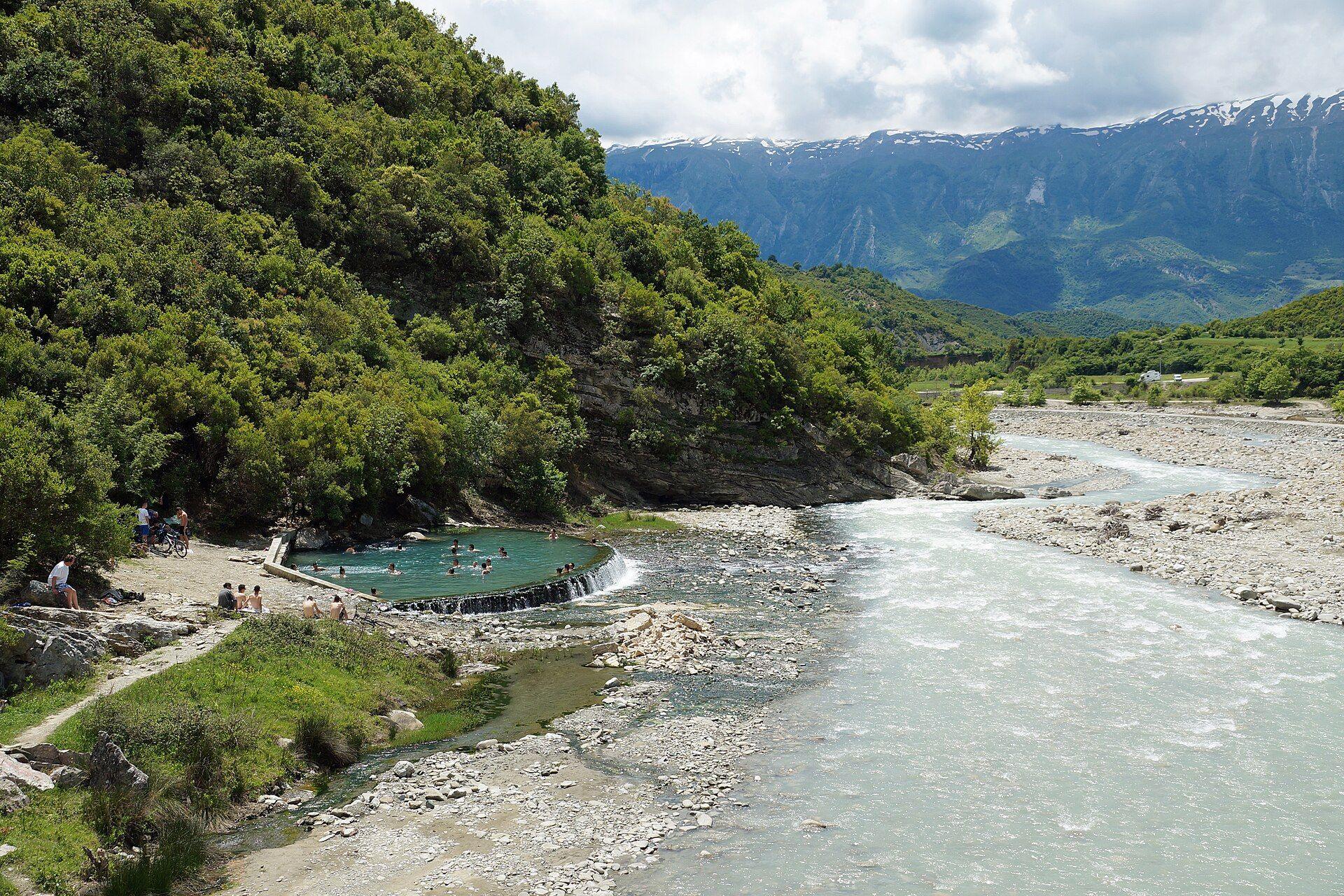
Natural rock formations and an area with rich cultural traditions.
Kisha e Labovës së Kryqit is a historic Byzantine Orthodox church in the village of Labovë e Kryqit, near Libohovë in southern Albania. It is widely regarded as one of the country's finest surviving examples of Byzantine religious architecture and is protected as a Cultural Monument of Albania.
Historical significance

The church is traditionally associated with the reign of Emperor Justinian I in the 6th century, although scholars generally believe the present structure was rebuilt or substantially remodeled between the 10th and 13th centuries. For centuries it served as an important pilgrimage destination, largely because local tradition held that it housed a revered fragment of the True Cross, giving the village its name, Labovë e Kryqit ("Labova of the Cross"). The relic disappeared in the late 20th century.
Architecture

The church is celebrated for its Middle Byzantine design. Its defining features include a prominent circular dome, a cruciform interior plan, a triple-arched passage (tribilon), and carefully crafted alternating stone-and-brick masonry. The exterior's decorative fishbone brickwork and the dome are considered among the most distinctive examples of Byzantine architecture in Albania and the wider Epirus region. Inside, visitors can still see layers of historic frescoes that reflect centuries of artistic additions and restoration.
Cultural importance

Beyond its architecture, the church represents an important part of Albania's Orthodox Christian heritage. Before religious practice was suppressed during the communist era in 1967, annual processions and feast-day celebrations drew pilgrims from surrounding communities. Although those traditions were interrupted, the church remains a landmark of Albanian cultural and religious history and has undergone restoration to preserve its architectural character.
Visiting

The church sits in the quiet mountain village of Labovë e Kryqit, a short drive from Libohovë and about 30–40 minutes from Gjirokastër. Many visitors combine it with nearby attractions such as Libohovë Castle, enjoying both the historic monument and the scenic Drino Valley landscape.
More to discover in Gjirokastër

Gjirokastra Castle
The main symbol of the city. One of the largest fortresses in the Balkans, with panoramic views over the Drino Valley. Inside it is a museum, a weapons gallery and a historical exhibition space.
Read more →
Weapons Museum
It exhibits weapons and military equipment from various historical periods, including World War II.
Read more →
Zakat House
One of the best examples of traditional Ottoman architecture of the 19th century.
Read more →Planning a trip?
Flights, car rental, tours, eSIM data, insurance and stays from partners we trust.
see travel dealsImages on this page are shown from their original sources and belong to their respective owners.