

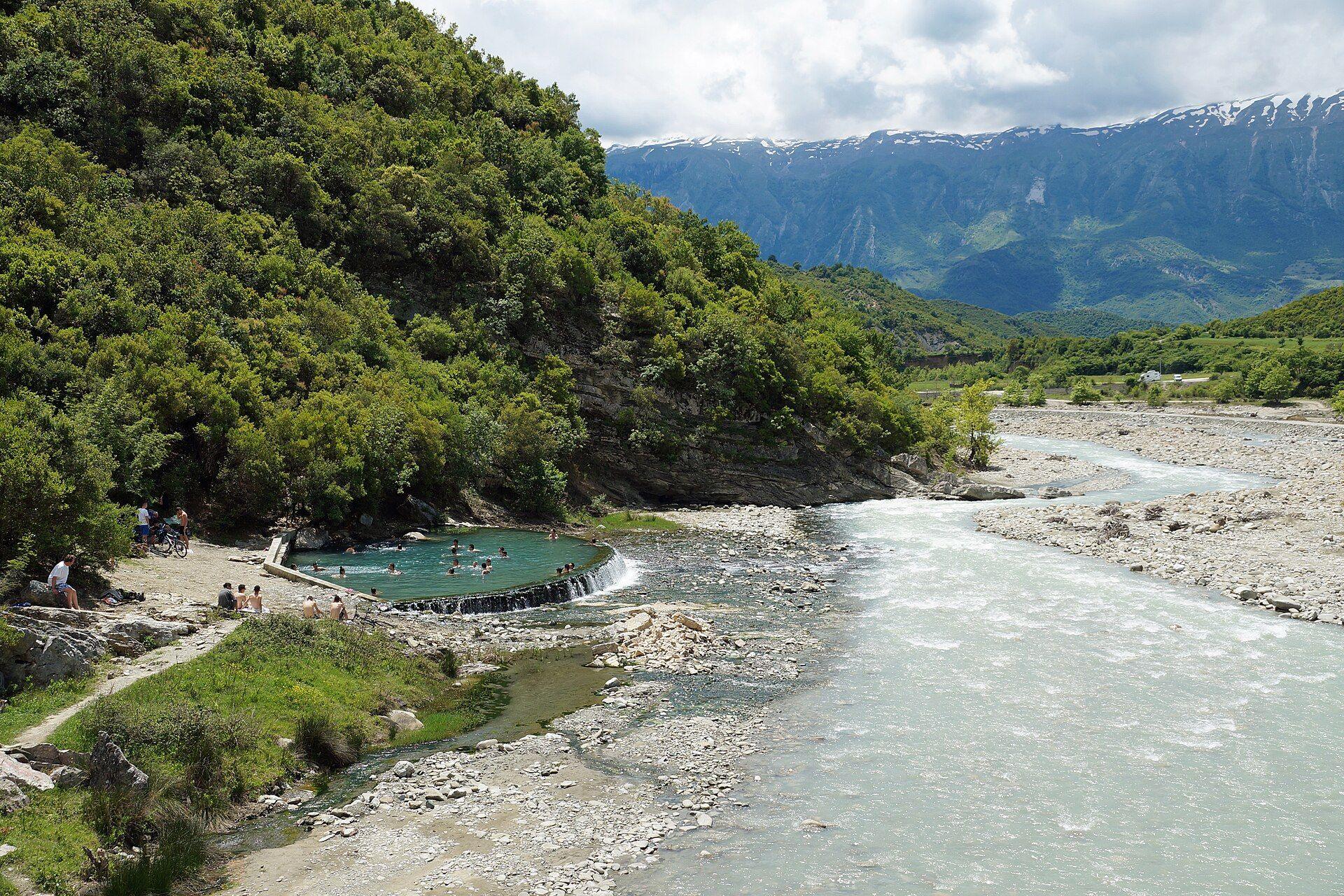

Vjosa River
One of the last wild rivers in Europe, ideal for rafting and kayaking.
- City: Gjirokastër
- Address: Vjosa, Southern Albania, Albania
- Open in Google Maps →
The Lumi Vjosa (Vjosa River) is one of Europe's last major free-flowing wild rivers, running from the Pindus Mountains in Greece through southern Albania before reaching the Adriatic Sea. Near Gjirokastër, it forms a striking landscape of braided channels, gravel islands, and mountain scenery, and has become internationally recognized for its exceptional ecological value and conservation achievements.
What makes it special

The Vjosa is unusual because it remains largely undammed along its main course, allowing natural flooding, sediment movement, and river habitats to function much as they have for centuries. Its waters support a remarkable diversity of fish, birds, mammals, and riverside ecosystems, making it one of the continent's most significant freshwater landscapes. More than 1,100 animal species have been documented within the protected area.
Protection and recognition

In 2023, Albania designated the river and key tributaries as the Vjosa Wild River National Park, recognized as Europe's first wild river national park. In 2025, the wider Vjosa Valley was added to UNESCO's Man and the Biosphere Programme, acknowledging both its biodiversity and the importance of sustainable development for local communities.
Visiting the river

The stretch near Gjirokastër offers opportunities to experience broad riverbanks, crystal-clear water, and panoramic mountain views. Depending on the season and location, visitors come for activities such as rafting, kayaking, hiking, birdwatching, photography, and simply enjoying the undeveloped river landscape. Nearby cultural attractions, including the historic city of Gjirokastër, make the area a popular combination of nature and heritage tourism.
Why it matters

The Vjosa has become an international symbol of river conservation because it demonstrates what a large, naturally flowing European river can look like when protected from major engineering projects. Ongoing conservation efforts focus not only on preserving the river's free-flowing character but also on addressing challenges such as pollution and ensuring that tourism develops sustainably.
More to discover in Gjirokastër

Gjirokastra Castle
The main symbol of the city. One of the largest fortresses in the Balkans, with panoramic views over the Drino Valley. Inside it is a museum, a weapons gallery and a historical exhibition space.
Read more →
Weapons Museum
It exhibits weapons and military equipment from various historical periods, including World War II.
Read more →
Zakat House
One of the best examples of traditional Ottoman architecture of the 19th century.
Read more →Planning a trip?
Flights, car rental, tours, eSIM data, insurance and stays from partners we trust.
see travel dealsImages on this page are shown from their original sources and belong to their respective owners.